Story Movie
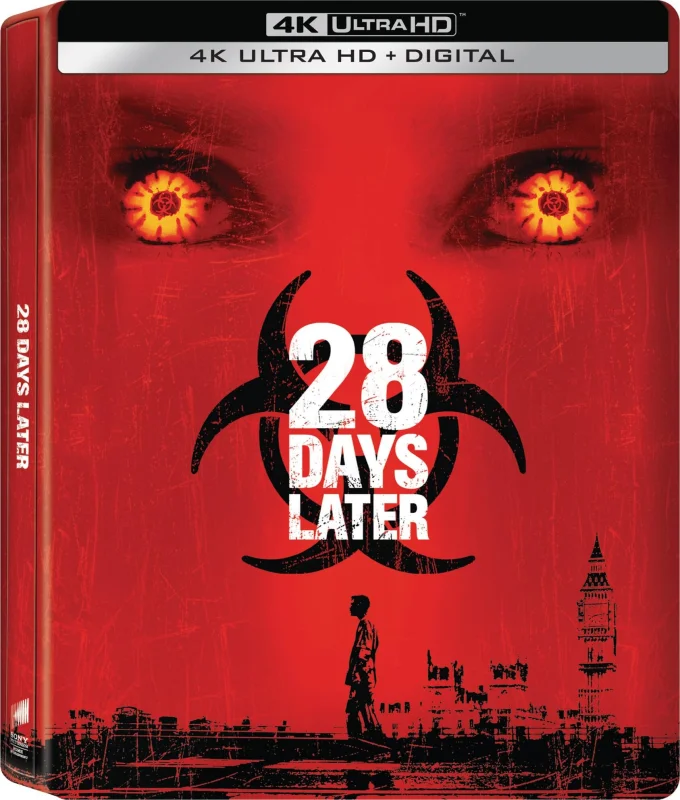
A group of “green” extremists breaks into the Cambridge Primate Research Center and releases a monkey infected with a virus that causes uncontrollable aggression from a secret scientific laboratory. The deadly virus, transmitted through blood in a matter of seconds, leads to instant infection and, upon contact with any living creature, transforms it into a bloodthirsty monster. Twenty-eight days later, the entire United Kingdom is gripped by a terrifying epidemic: many are evacuated, while others seek safe havens in the hope of survival. After waking up in a hospital and missing the peak of the epidemic and the mass evacuation, a young man named Jim wanders through a deserted London, trying to figure out what happened. Soon he encounters the infected, who attack him, but two survivors come to his aid.
Review 4K Movie
I consider this movie the best zombie horror film of all time! It’s just an incredible movie! Damn it, why didn’t I go to the premiere? I watched this masterpiece almost five years after it came out. Now I regret it. “28 Days Later” is a zombie horror classic, and I’m deeply convinced that no one has yet surpassed it in terms of production quality.
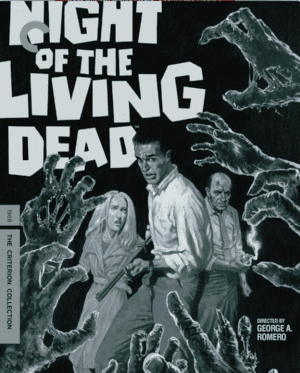
What is the magic behind this masterpiece? How does it differ from other zombie horror movies? After all, we’ve seen George Romero’s cult trilogy, “Something Dead”, and we’ve seen Zack Snyder’s dark and terrifying “Dawn of the Dead”. Yes, they’re very dark and terrifying. Yes, they featured the same sense of utopia and utter despair. We worried for the entire planet as we watched its ruins and the countless hordes of zombies surrounding humanity’s last remaining cities. But… That doesn’t even come close to what you’ll first see—and then feel—in the masterpiece 28 Days Later. It can’t be explained in words; you have to see it and feel it.
When the protagonist walks out of the hospital and looks at a deserted London, it seems like nothing special is being shown—we’re used to that. But no… You literally feel the protagonist’s emotions; you feel that there really is no one left in London. The director deliberately removed all music from the scene so that we hear only the wind and Jim’s lonely footsteps. It gets more intense from there. We see trash scattered across the city’s streets, and this puts even more pressure on our nerves. It feels as though people simply abandoned their lives and fled from certain death. It’s as if you’re walking through this city yourself and analyzing what you see alongside the main character, Jim. And the music is still silent. When Jim sees a zombie for the first time, you start flinching at them yourself, as if you’re seeing them for the first time. However, the film isn’t just about those first 15 minutes. From there, the plot moves slowly but very smoothly along the film’s runtime. Later, they make their way out of the city and head toward a military base in hopes of surviving. The obstacles they overcome and how they’re filmed deserve nothing but applause. Standing…
But that’s not all. If you think the entire film will be devoted solely to killing zombies, you’re mistaken. When the second half of the film begins (at the military base), the drama—which had been present throughout—comes to the forefront. Here, along with the characters, we analyze everything that’s happening, everything that’s happened to them, and just how much it has changed them. I really liked a line spoken by the base commander: “Personally, I don’t see any changes. People used to kill people. The same thing is happening now.” A very powerful line.
In general, this film is full of memorable quotes. Every line, every dialogue is delivered with unprecedented intensity. For this, we have screenwriter Alex Garland to thank. He does a brilliant job of fleshing out the characters here. Moreover, all the plot lines unfold quite logically and realistically. In the end, we see a purely philosophical subtext, laid bare without any pretense. We see how people begin to kill one another, despite the imminent threat of death from the zombies—their common enemy. And instead of uniting and trying to solve everything together, each person chooses only one thing: “Survive!” But to survive only on their own. All the old rules about friendship and caring for others are forgotten. Now the only thing that matters is survival—and only for oneself. The scene where Jim kills a soldier by gouging out his eyes feels almost otherworldly. It is precisely in this scene that we see the full drama the director wanted to convey with this film. Humans are simply not equipped to handle such an attack. Believe me, the plot doesn’t let up for a single moment. It flows smoothly and harmoniously with the overall flow of the film.
The acting in the film is also top-notch. I watched this movie just yesterday, so here’s what I can say: I first noticed Cillian Murphy in the movie Batman Begins, where he played the Scarecrow. In my eyes, he really stood out from everyone else in that film. And here, I saw him in a leading role for the first time. And I have to say, his performance is just as superb as ever! Every gesture, every glance—Cillian brings it all to life beautifully. The other actors are just as good, but Cillian Murphy is my favorite. Now that’s talent. I’m glad he played the lead role in the film.
There’s almost no music in the film, but when it does come on, you notice it right away. It comes in only at the most crucial moments and really enhances the film’s atmosphere. The scene where Jim runs from the zombies while his friends cover him with Molotov cocktails is shot absolutely brilliantly. And in the background, a powerful, adrenaline-pumping melody plays. That made the scene truly memorable. And the gas station explosion was the perfect way to wrap up that scene. So, if it weren’t for those brief musical interludes, the film would have lost a third of its charm.
In fact, practically every frame here is stunning. Danny Boyle is truly a very talented director. He made a real gem on a shoestring budget! He always makes films with his own unique style and cinematographic approach. This film was no exception. Boyle’s distinctiveness is immediately apparent. He really stands out from the rest, even among popular directors. Here, he doesn’t play around with the film’s color palette, but instead designs the sets with an incredible attention to detail. Every piece of trash, every speck of dust lying on the asphalt is there for a reason. It all contributes to the atmosphere. And Boyle knew this, which is why he arranged everything with such meticulous care. After all, you have to admit, looking at a trash-strewn city is much more atmospheric than looking at one that’s simply empty.
I also really want to praise the cinematographer. Those angles, those jerky movements, those constant twists and turns—it all looks spectacular and adds excitement to everything that’s happening! Take that same scene with the zombies chasing Jim, where they’re being doused with a flammable mixture—the camera angles are simply delightful. They create truly realistic and spectacular shots. You can’t take that away from the movie. The constantly shaking camera, the very skillfully chosen angles—all of this is also part of the film’s brilliant success.
When the movie ended and the credits rolled, I rewound to my favorite moments. I just didn’t want it to end—I wanted more! I never would have thought this movie would hook me so much. And it all started with the thought: “I’ll just watch the first 15 minutes…” I watched them, and I just couldn’t tear myself away.


 [/full-link]
 [/full-link]